
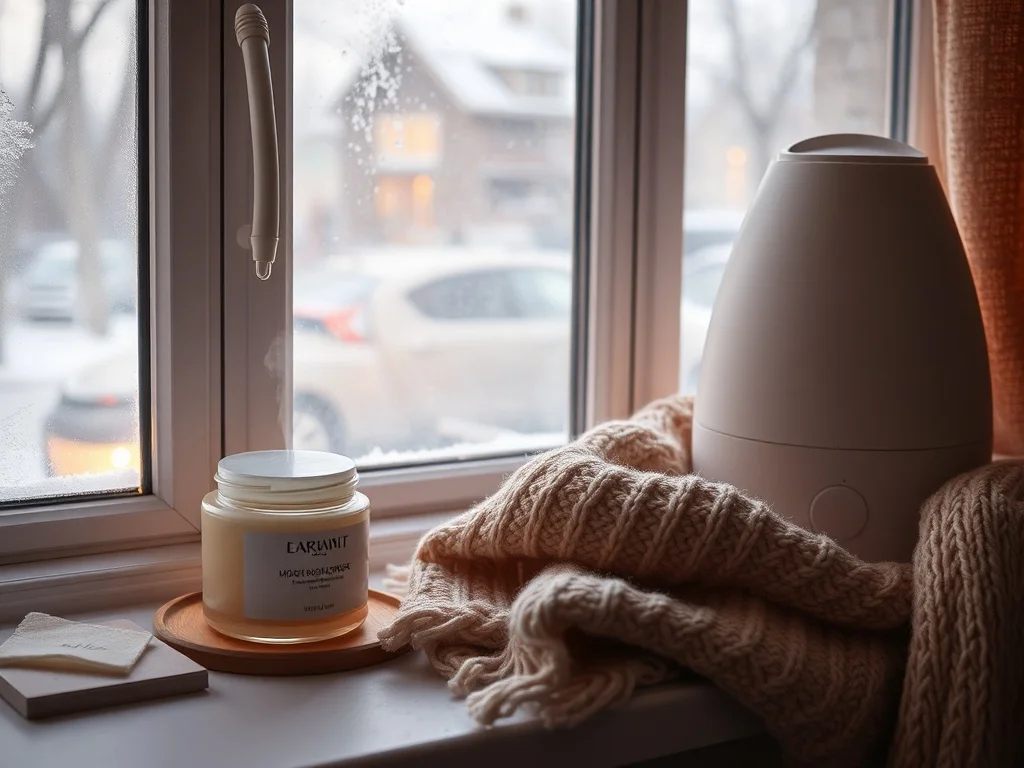
Winter Vitiligo Care: Dry Skin, Indoor Heating, and Less UV
Winter shifts a few things about vitiligo care that are easy to overlook if your routine was built around summer conditions: less intense but still-present UV exposure, significantly drier air from indoor heating, and — for some people — a natural point to reconsider or restart phototherapy.
Sun protection doesn’t stop, it just adjusts
Winter sun is generally weaker than summer sun, but “weaker” is not “absent” — UV exposure continues year-round, including on cloudy days (UV penetrates cloud cover more than people expect) and through car windows during winter driving. Depigmented vitiligo patches have zero natural UV protection regardless of season, so daily sunscreen on exposed skin remains appropriate through winter, even if the daily habit feels less urgent when it’s cold and gray outside.
Where winter sun protection genuinely does shift: less skin is typically exposed (long sleeves, gloves, scarves are doing some of the sun-protection work that sunscreen does in summer), so the practical application area often shrinks to face, neck, and hands — worth adjusting your routine to match rather than either over-applying to covered skin or under-applying to what’s still exposed.
Indoor heating and dry skin
This is the bigger seasonal shift for most people. Indoor heating significantly dries the air, and that dryness affects skin broadly — vitiligo patches, which often run somewhat drier than surrounding skin even in ideal conditions, can be disproportionately affected during winter months.
This matters beyond comfort: dry, cracked skin is a recognized Koebner trigger, meaning unmanaged winter dryness carries a real, if modest, risk of contributing to new patch activity at sites of skin trauma from cracking or excessive scratching. A more consistent, possibly heavier moisturizing routine through winter is a reasonable proactive step, not an overreaction.
Winter barrier support
CeraVe Moisturizing Cream
Ceramide-rich and fragrance-free — worth applying more consistently through winter months when indoor heating dries skin faster than usual.
Check Price on AmazonConsider a humidifier in bedrooms or main living spaces if winter dryness is significant — this addresses the root cause (dry indoor air) rather than just compensating with more moisturizer applied to already-dry skin.
Hands need extra attention
Hands already need more moisturizing attention than most body areas year-round, given how often they’re washed. Winter compounds this — cold outdoor air, frequent handwashing, and indoor heating all working against skin barrier health simultaneously. If you have hand vitiligo, winter is worth a genuinely more deliberate hand-care routine than the rest of the year might require.
Is winter a good time to start or adjust phototherapy?
Many dermatologists actually suggest autumn as a good time to start a new NB-UVB protocol specifically, because lower ambient UV exposure resets baseline skin sensitivity, allowing for cleaner, more predictable dose calibration than starting in summer when your skin already carries some baseline UV exposure and tan from daily life. Running a phototherapy course through autumn and winter means arriving at spring with an established protocol and, ideally, some early repigmentation already underway.
If you’re already mid-protocol heading into winter, there’s no need to pause — just keep the barrier-support routine above in mind given the drier ambient air, and continue your session schedule as planned.
What changes and what doesn’t
Changes: moisturizing intensity and frequency (more), sun-protected skin area (typically larger, due to clothing), the case for starting a new phototherapy protocol (arguably a good window).
Doesn’t change: the need for daily sun protection on exposed skin, the importance of consistent treatment application if you’re on an active prescription, and general Koebner-awareness around skin trauma.
My take
Winter doesn’t require a fundamentally different vitiligo care philosophy — it requires the same core principles (sun protection, barrier support, consistency) applied with attention to what’s actually different about the season: less intense sun but still real exposure, and meaningfully drier skin from indoor heating. A slightly heavier moisturizer and continued sunscreen habit through the colder months covers most of what winter actually changes.
